


On this page
Official History of Pokimono
History of the Sun Empire
The Imperial Calendar
The Sun Empire keeps its years by the Tenshō Calendar, also called the Calendar of Heaven's Bearing. Its count began after the sealing of Tornadus, Thundurus, Landorus, and Enamorus, when the surviving villages swore themselves beneath the renewed blessing of Lady Arceus and the first imperial rites were recorded.
The current year is Tenshō 412 — more than four centuries of reckoning since the count began at the sealing.
By the Empire's reckoning, the calendar is usually written by season, moon, and year. A formal record might name a date as the Fourth Day of Rain Moon, Tenshō 412, while common folk are more likely to say "early Rain Moon" and call it done.
The great archive houses of Gale Spring and Radiant Harbor keep the official rolls. Smaller shrines, merchant houses, and village halls often keep their own copied records, though these do not always agree with each other. Ink fades. Priests argue. Sometimes a clerk simply had terrible handwriting.
The Divine Beginning
Long before the Sun Empire bore its current name, before its roads were paved in shrine-stone and lanterns marked the trade ways between villages, the world was said to rest beneath the gaze of four divine siblings.
Lady Arceus, goddess of creation, dwelled upon the celestial plane with her three brothers: Dialga, lord of time, Palkia, lord of space, and Giratina, watcher of the Underworld.
Together, the four shaped the known world. Arceus breathed life into emptiness. Dialga set the rivers of time in motion. Palkia gave form to distance, border, and place. Giratina kept watch over the dark passage beneath all living things, where spirits crossed after death and where forgotten things were not always gone.
Many lands keep their own versions of this tale. In the Sun Empire, however, the story of Arceus is not treated as distant myth. It is the root of law, shrine, leadership, and blood oath. The Empire believes itself to stand where her favor first touched the mortal world.
The Original Seven Villages
Before the Empire became four great villages and their surrounding wards, the land was divided among older settlements. For centuries it was a rougher age, now known in the archives as the Patchwork Era, when clan holds, fishing towns, shrine hamlets, and fortified markets shared borders uneasily.
There was no single imperial road then. No common oath. No shared banners.
The surviving records name seven settlements as the crowns of that older map.
- Sky Village
- Crystal Lake
- Fire Field
- Thunder Mountain
- Dark Forest
- Steel Cave
- Ice Bay
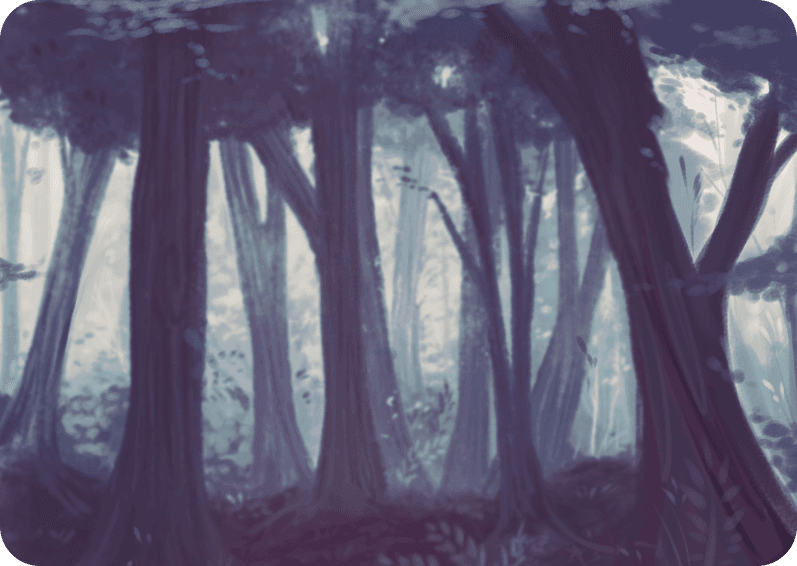
Each village had its own rites, leaders, crafts, and pride. Sky Village watched the heavens and read the movement of clouds. Crystal Lake held old water rites and mirror-smooth shrines. Fire Field lived by forge, ash, and harvest. Thunder Mountain kept watch from high passes where storms gathered like banners. Dark Forest guarded its paths and spoke softly of spirits beneath the trees. Steel Cave drew ore and metal from the deep earth. Ice Bay endured winter winds and the hard mercy of the northern sea.
They traded with one another when trade was useful. They offered aid when disaster was too large for one village alone. But peace was never simple. Old insults survived longer than treaties, and border disputes could outlive the elders who started them.
As the villages grew, so did their conflicts. Rival shrines competed for worship. Clan heads argued over roads, wells, grazing rights, fishing waters, and access to sacred land. The old chronicles speak of raids, broken betrothals, stolen relics, and winters where one village refused grain to another.
It was in this age that Lady Arceus gave her blessing.
The First Legendaries
To prevent the land from tearing itself apart, Lady Arceus chose certain mortals and raised them above ordinary blood. These blessed souls became known as Legendary Pokémon — guardians, judges, shrine-bound protectors, and living proof the gods had not abandoned the mortal world. They were not kings in the modern sense.
Each village came to be guided by a Leader and protected by a Guardian. When one aged, fell, or stepped down, another was chosen in time; the blessing did not belong to one family forever, though powerful bloodlines often argued otherwise. For centuries the cycle held: a Legendary rose, a village swore itself, and life went on — until many believed the order would last to the end of days.
They were wrong.
The Kami Shrine
Between Crystal Lake and Ice Bay once stood the Kami Shrine, a holy place dedicated to the Weather Kami: Tornadus, Thundurus, Landorus, and Enamorus.
In those days they were honored as powerful spirits of storm, wind, rain, spring, and violent season. Farmers prayed for mercy. Sailors left offerings before long voyages. Mountain folk carved their signs into gateposts and cliff stones. Though Lady Arceus stood above all in imperial worship, the Kami Shrine remained old, proud, and deeply loved.
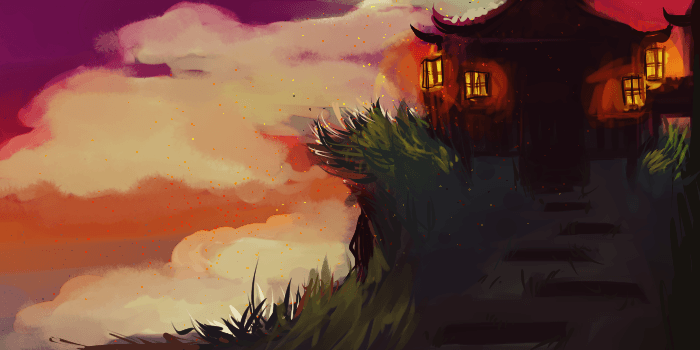
Across the centuries, that devotion changed.
As Arceus worship spread through the Seven Villages, Tornadus, Thundurus, Landorus, and Enamorus were offered fewer rites. Their shrine grew quieter. Pilgrims still came, but not as they had before. Priests argued over whether offerings had been neglected, whether sacred boundaries had been disrespected, or whether the Weather Kami had always carried envy in their hearts.
The truth is lost. The result is not.
The Kami Shrine was destroyed.
No record agrees on who struck first. Some claim the shrine collapsed in a storm with no mortal hand involved. Others whisper that rival priests sabotaged its foundations. A few forbidden accounts insist that Tornadus, Thundurus, Landorus, and Enamorus themselves shattered the shrine in grief and rage, unable to bear the loss of worship.
Whatever the cause, the destruction drove Tornadus, Thundurus, Landorus, and Enamorus into madness.
Their fury fell across the land.
The Shrine War
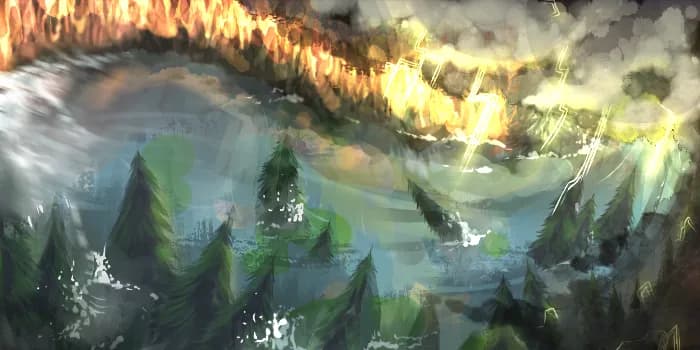
The war that followed is remembered as the Shrine War, though older songs call it the Season of Broken Roofs.
Storms tore through the old borders. Floods swallowed roads. Lightning split watchtowers and shrine gates. Crops failed in places that had never known hunger. Snow fell where it had no place falling. Fires burned under rain. The world itself seemed to forget its proper order.
The Leaders and Guardians of the Seven Villages gathered their people and abandoned the oldest settlements. Some left willingly. Some were dragged from homes they would never see again. Others stayed behind and vanished from the record entirely.
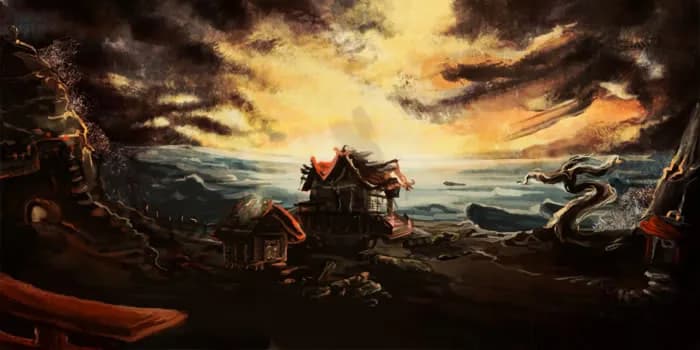
The final battle took place near the ruined Kami Shrine. What happened there remains one of the Empire's most guarded sacred histories. The public chronicle says only this: Tornadus, Thundurus, Landorus, and Enamorus were defeated, bound, and sealed within the resurrected Kami Shrine, which rose again from its own wreckage through divine rite and sacrifice.
The shrine still stands.
Few are permitted near it.
Fewer speak of what they hear there when the wind changes.
The Four Great Villages
The Shrine War broke the old map beyond repair.
The old seven did not survive as they had been. Their people scattered, merged, and rebuilt. Old clan banners were folded away. New ward lines were drawn. Wells, roads, shrines, and markets pulled survivors into fewer, larger settlements.
From the ashes of the old Seven rose the four great villages known today:
Scorched Mountain
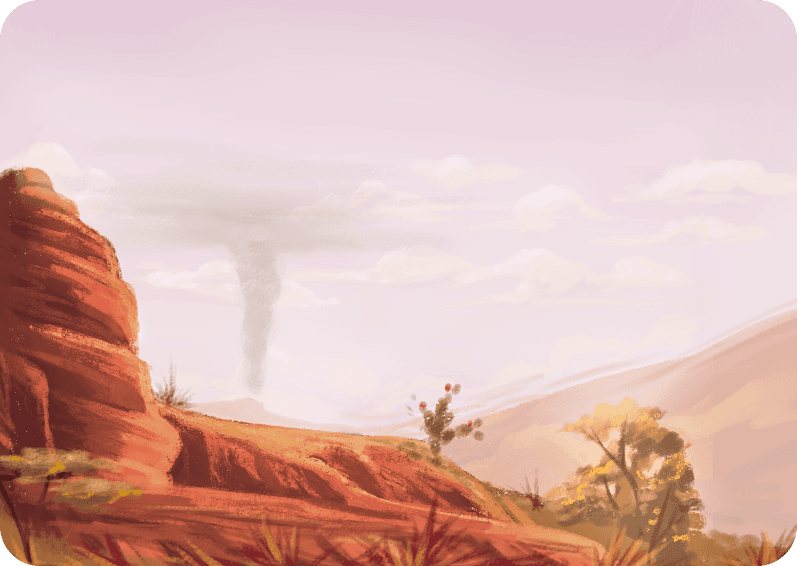
A harsh and enduring settlement shaped by heat, stone, forgecraft, and stubborn survival. Many families here claim descent from Fire Field, Thunder Mountain, and Steel Cave, though the truth is tangled by centuries of marriage, migration, and lost records.
Gale Spring
A shrine-rich village known for priests, scholars, water rites, and high ritual culture. It holds many records from Crystal Lake and Sky Village, though it also has a habit of claiming any beautiful old document as "probably ours."
Noir Vale
A shadowed and storied village whose roots reach back toward Dark Forest, Ice Bay, and the old border clans. It is known for secrecy, endurance, spiritual caution, and a deep respect for what should not be disturbed.
Radiant Harbor
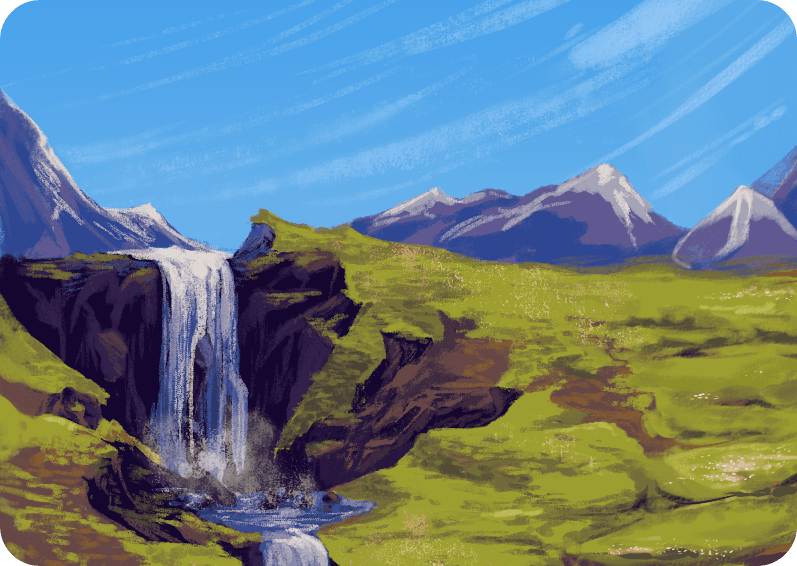
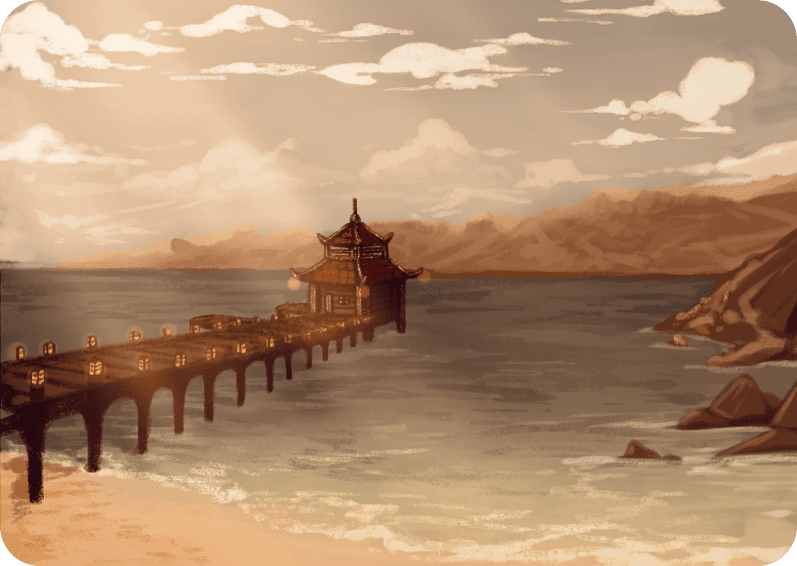
Founded by refugees who fled southeast during and after the Shrine War, Radiant Harbor began as an isolated cove settlement. Over the centuries, it grew into the Empire's great merchant coast, home to sailors, traders, foreign visitors, sea priests, scholars, and wealthy houses whose money speaks louder than some village bells.
Together, these four villages formed the new shape of the Sun Empire.
The old Seven became history. Then legend. Then lessons for children, warnings for leaders, and arguments for bored scholars who enjoy making simple things difficult.
The Long Peace
The centuries after the Shrine War are known as the Long Peace, though the name is kinder than the truth.
There were disputes, of course. There were border tensions, succession quarrels, trade fights, forbidden marriages, shrine scandals, failed harvests, bandit years, and more than one village council that nearly ended in bloodshed. Still, compared to the age before it, the Empire endured.
The blessing of Lady Arceus continued through the Leaders and Guardians. The Arceus Shrine became the spiritual heart of the Empire; roads and trade linked the four villages, with Radiant Harbor opening the coast to distant lands while Gale Spring, Scorched Mountain, and Noir Vale played their familiar roles in rite, supply, and watch. For generations the system held — not perfectly, but it held.
Present day
The four great villages have held their current borders, charters, and hall seats for two centuries, since the reforms and sealed surveys of Tenshō 212. Generations have grown up knowing no other arrangement; only the oldest retainers still recall the shuffle of wards before then.
The Empire enters Tenshō 412 in a state of outward peace and inward strain.
On the surface, little has changed — markets, shrines, and roads still keep their rhythms. To an outsider, the Sun Empire still looks stable.
It is not.
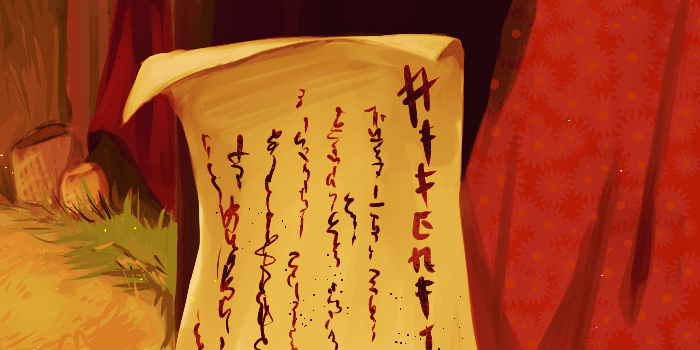
Across all four great villages, the Leaders and Guardians have been slipping away for the past couple of years — not one night's vanishing, but a slow thinning of shrine daises and hall seats until no roster looks whole anymore.
Through it all, Lady Arceus has been silent: no shared vision, no decree that the Arceus Shrine can speak aloud with confidence. No formal abdications match the pattern. No bodies everyone agrees on. No divine succession declared — only priests who answer in circles and common folk who feel the land getting nervous beneath them.
Without the Leaders and Guardians, the old balance has begun to crack.
Village councils blame one another in private. Merchant houses are quietly hiring protection. Shrine officials speak carefully and say very little. Border patrols have doubled. Old clan names, once kept politely out of public politics, are being spoken again in closed rooms.
Some believe Lady Arceus's silence is a test.
Some believe Tornadus, Thundurus, Landorus, and Enamorus are stirring inside their seal.
Some believe the Leaders and Guardians abandoned the Empire.
Some believe war has already begun, and only the first blade has not yet been drawn.
For now the people wait — bells, roads, and incense unchanged — while every village watches the others. In Tenshō 412, the Sun Empire stands closer to war than it has been since the fall of the Kami Shrine.
